

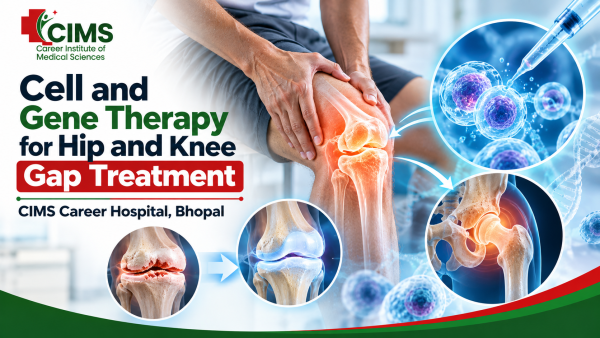
Cell and Gene Therapy for Hip and Knee Gap Treatment | CIMS Career Hospital, Bhopal
Hip and knee pain can make everyday activities like walking, climbing stairs, sitting, and standing difficult. One common cause is the gradual wearing away of cartilage, the smooth tissue that protects the ends of bones inside a joint. When this cartilage becomes thin, the space between the bones may narrow, leading to pain, stiffness, and reduced movement.
Many patients search for knee gap treatment to understand whether the gap between their bones can be restored without surgery. Advances in orthopaedics and regenerative medicine, including cell and gene therapy, are creating new possibilities for treating certain joint conditions. At CIMS Career Hospital, Bhopal, patients can consult orthopaedic specialists to understand their diagnosis and explore suitable treatment options.
What is Knee Gap Narrowing?
The term 'knee gap' usually refers to the space visible between the bones on an X-ray. This space is maintained largely by the cartilage inside the knee joint.
In conditions such as osteoarthritis, cartilage gradually wears down, causing the joint space to become narrower. This may lead to:
-
Knee pain while walking or standing
-
Stiffness after resting
-
Swelling around the joint
-
Difficulty climbing stairs
-
Reduced flexibility and movement
Similar changes can occur in the hip joint. The correct treatment depends on the cause, severity, age, activity level, and overall health of the patient.
What Are Cell and Gene Therapy?
Cell and gene therapy refers to advanced medical approaches that use living cells or genetic material to treat or manage certain diseases. In orthopaedics, researchers are studying these approaches to understand whether they can reduce inflammation, support tissue repair, and improve joint function.
-
Cell therapy may involve using specific cells, such as mesenchymal stromal cells, to influence the body's healing response. Some treatments use cells obtained from bone marrow or other sources.
-
Gene therapy involves introducing, removing, or changing genetic material in cells to achieve a specific medical effect. Researchers are investigating gene-based approaches for cartilage damage and osteoarthritis, but many remain experimental.
It is important to understand that not every regenerative treatment is a proven way to regrow cartilage or restore lost knee joint space.
Can Cell and Gene Therapy Correct Knee Gap Narrowing?
Patients often hope that cell and gene therapy can rebuild damaged cartilage and restore the original gap between the bones. However, current evidence does not establish that these treatments can reliably reverse advanced osteoarthritis or permanently restore lost joint space.
Some cell-based treatments are being studied for their potential to reduce pain and improve movement in selected patients. Results vary, and the long-term benefits and safety of many approaches remain under investigation.
Therefore, knee gap treatment should begin with an accurate diagnosis rather than a promise of cartilage regrowth. An orthopaedic specialist can explain whether established treatments or a suitable regenerative therapy may be appropriate.
What Are the Available Knee Gap Treatment Options?
Treatment depends on how much cartilage has worn away and how severely the joint is affected.
| Treatment option | How it may help |
|---|---|
| Physiotherapy | Strengthens muscles and improves flexibility |
| Weight management | Reduces pressure on the hip and knee joints |
| Medicines | Helps manage pain and inflammation |
| Exercise modification | Reduces excessive stress on affected joints |
| Injections | May provide symptom relief in selected patients |
| Cell-based therapies | Being studied for possible benefits in selected joint conditions |
| Knee or hip replacement | Replaces damaged joint surfaces in advanced disease |
No single treatment is suitable for everyone. The goal is to reduce pain, improve mobility, and help patients maintain their quality of life.
Cell and Gene Therapy at CIMS Career Hospital, Bhopal
Choosing the right hospital is an important step when dealing with persistent hip or knee pain. CIMS Career Hospital, Bhopal, provides patients with access to medical evaluation and orthopaedic consultation to help identify the cause of joint problems and discuss appropriate care.
Patients looking for knee gap treatment can consult a specialist about imaging, cartilage damage, joint function, and available treatment choices. If they are interested in cell and gene therapy, they should ask whether a particular treatment is approved, supported by clinical evidence, and appropriate for their condition.
Treatment availability can vary, so patients should confirm directly with the hospital whether a specific cell-based or gene therapy procedure is currently offered.
When Should You Consult a Knee Expert?
Do not ignore persistent joint pain, swelling, stiffness, or difficulty walking. Early assessment can help identify the problem and may allow patients to begin suitable treatment before symptoms become more severe.
An orthopaedic specialist can review X-rays or other scans, assess joint movement, and explain the benefits and limitations of each option.
Contact CIMS Hospital Bhopal.
Address: Dussehra Maidan, BHEL Square, Sector A, Govindpura, Bhopal, Madhya Pradesh – 462023
Phone: 9522982211
Website: www.cimshospital.com
Conclusion
Cell and gene therapy is an exciting area of medical research, but it is not yet a guaranteed solution for restoring lost cartilage or correcting advanced knee gap narrowing. Effective knee gap treatment depends on the underlying cause, the severity of joint damage, and an individual's health needs.
At CIMS Career Hospital, Bhopal, patients can seek expert guidance for hip and knee problems and learn about evidence-based treatment options. Consult an orthopaedic specialist to understand your condition and choose a treatment plan based on medical evidence, safety, and your mobility goals.